
Reviewed · WEST COAST TOURS
Doha: Combo Heritage & Art Tour of North and West Qatar
Qatar’s best surprise may be far from Doha’s glass towers, where abandoned villages, old forts, and huge steel sculptures share the desert with fishing towns and quiet coastlines. This seven-hour tour links those very different places in one long but rewarding day.
I like the mix of serious history and modern art, especially the contrast between Al Zubarah Fort and the spare desert works by Olafur Eliasson and Richard Serra. I also like that round-trip transport, drinks, and an English-speaking guide are included. The main drawback is the amount of time spent on the road, so this suits you best if you want a broad view of northern and western Qatar rather than a slow visit to one site.
Key Points to Know Before You Go
- Olafur Eliasson’s installation uses the desert itself as part of the artwork, making the setting as important as the work.
- Al Jumail Village offers a quiet look at a former pearl-trading community, now abandoned and weathered by time.
- Al Zubarah Fort gives the history-focused part of the day a clear focal point and is listed as a UNESCO site.
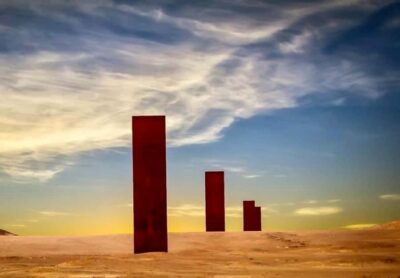
- Richard Serra’s East-West/West-East places towering steel forms in a stark desert setting near Zekreet.
- Guides Junaid and Javid have been especially praised for storytelling, local culture, and taking photographs.
- The seven-hour schedule covers a lot of ground, with visits ranging from 30 to 40 minutes at each main stop.
Why This Northern Qatar Tour Is Worth Your Time
This is not a standard city sightseeing trip. You leave Doha behind and spend much of the day among old settlements, coastal views, archaeological remains, and contemporary art that would look out of place almost anywhere else.
That contrast is the point. Qatar’s past is not presented as a museum display alone. You see it in a ruined village, a fortified trading site, and coastal communities linked to fishing and pearl commerce. Then the tour shifts to artists who use open space, silence, and harsh light as part of their work.
I think the tour works especially well for a first visit to Qatar. You get a sense of the country beyond Doha without having to arrange several separate taxi rides or work out a route through remote areas yourself. The guide also matters here. The places are spread out, and some of their meaning is easy to miss if you only arrive, take a photo, and leave.
Guides named Junaid and Javid have received especially warm praise for their storytelling, local context, and photography help. Guide assignments can vary, but the experience clearly depends on having someone who can explain what you are seeing rather than simply drive between stops.
More west coast days out of Doha:
- From Doha: Day Trip to North And West Qatar With Pickup
★ 4.9 · 336 reviews - Qatar West Coast tour to Richard Serra Sculpture and Mushroom Rock Formation
★ 5.0 · 153 reviews - Qatar West Coast tour, Zekreet, Richard Serra Sculpture, Mushroom Rock Formation
★ 5.0 · 150 reviews
Al Ruwais, Where the Tour Meets Qatar’s Northern Coast
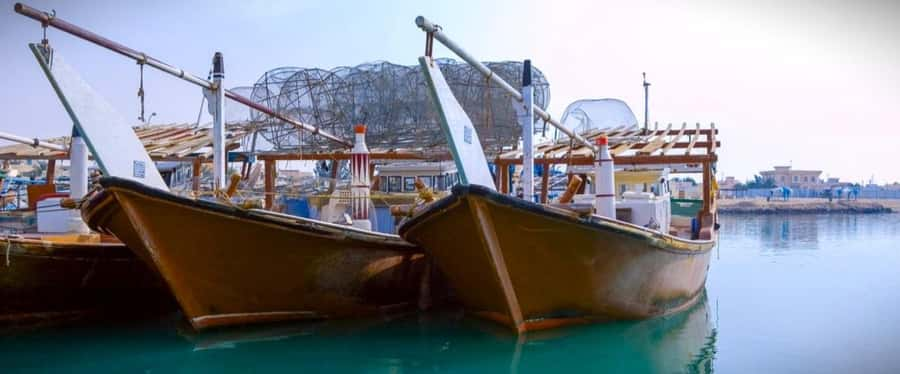
The first stop is Al Ruwais, a coastal town visited for about 30 minutes. Its appeal is simple: sea views, a quieter pace, and a connection to Qatar’s traditional fishing culture.
This is a useful opening stop because it gives you a feel for the northern coast before the tour moves inland and toward older settlements. Do not expect a long guided walk or a packed attraction. The value is in the setting and in the explanation of how coastal life fits into Qatar’s past.
The short stop also sets the rhythm for the day. You will see several places, but none is treated as a full-day visit. If you like collecting different impressions, that pace is efficient. If you prefer to sit by the water or explore every corner, 30 minutes may feel brief.
Bring your camera, but also take a moment to look beyond the obvious view. Northern Qatar’s appeal is often in the combination of open water, pale ground, low buildings, and wide horizons. The scenery does not need much decoration.
Al Jumail Village and the Remains of Pearl Country
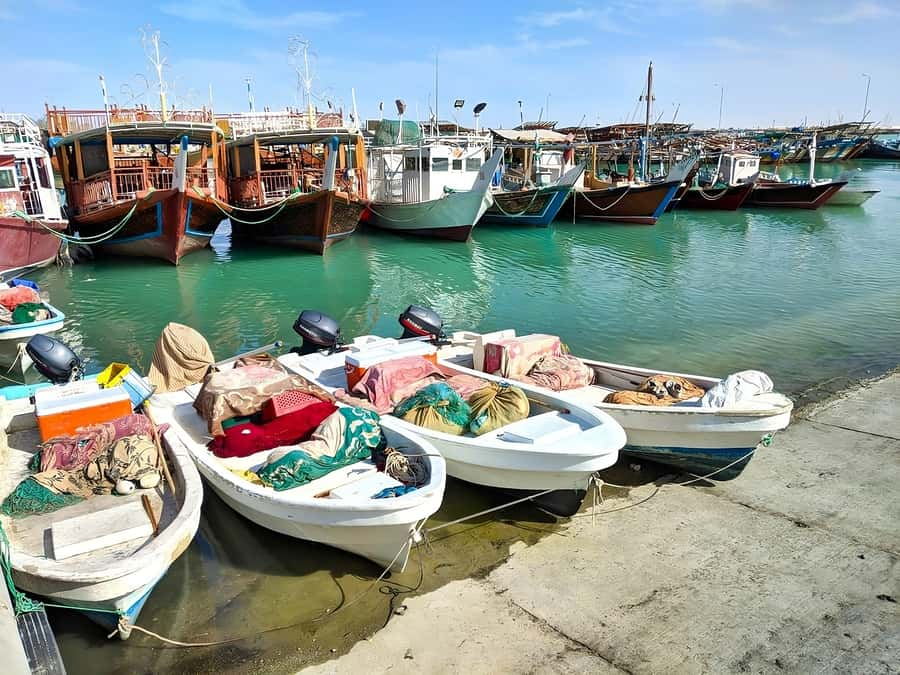
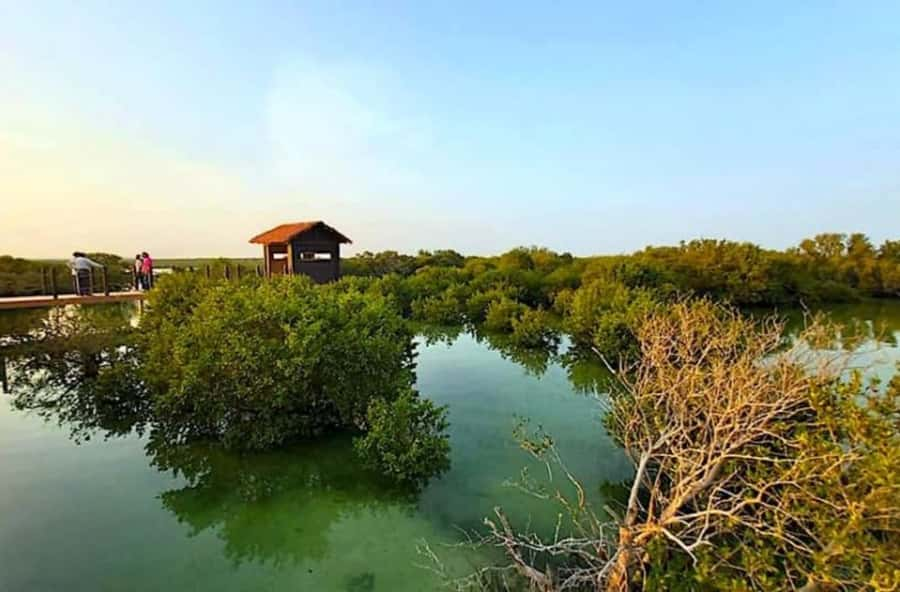
Al Jumail Village is one of the most atmospheric stops. You spend about 30 minutes at this abandoned settlement, once associated with pearl gathering and coastal life.
An abandoned village can be more revealing than a polished heritage display. Here, the empty structures and worn surfaces suggest how quickly a community can fade when work, trade, and population move elsewhere. The stop gives you a direct connection to the era before Qatar’s modern wealth reshaped daily life.
The site is best approached with some patience. Do not expect a large visitor center or a long list of formal exhibits. Its story comes through the remains and through the guide’s explanation. This is where a good storyteller can make a real difference.
Junaid has been particularly praised for bringing local history and culture to life. That strength matters at Al Jumail, where the physical remains may not explain themselves fully. Ask about the village’s connection to the sea and pearl trade if the guide does not cover it early.
Because the visit is short, wear shoes suitable for uneven ground and avoid treating the stop as only a photo break. The village is one of the day’s clearest links to ordinary life in earlier Qatar.
Olafur Eliasson’s Desert Installation
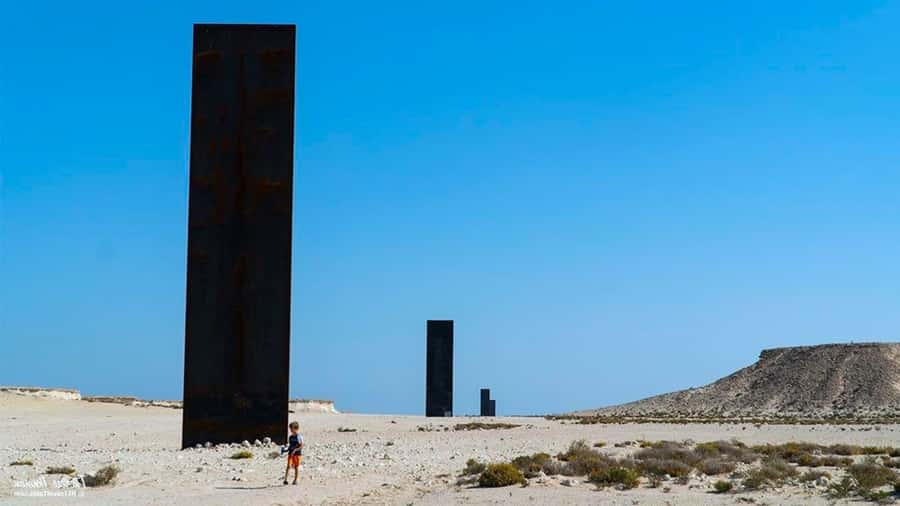
The tour then turns to modern art, with a 30-minute visit to Olafur Eliasson’s desert installation. This is an artwork that asks you to pay attention to the setting around it, not just to an object placed in front of you.
Eliasson’s work is a strong match for Qatar because the desert offers intense light, distance, and a sense of scale. Modern art can sometimes feel sealed away in a gallery. Here, the surrounding terrain is part of the experience, and the changing light affects how you read the work.
You do not need a background in art to enjoy this stop. Start with the basic questions: What changes when you move around it? How does the work alter your sense of the open space? Does the desert seem empty, or does the artwork make you notice its details?
The 30-minute visit is enough for an introduction, photographs, and a little time to look without rushing too badly. It is not enough for a long, reflective art study, especially if your group spends time taking pictures. Still, the short visit works well within a route that includes several different types of attraction.
This is also a good place to listen to the guide rather than rely on a quick internet explanation. The artwork’s meaning is tied to its location, and a local guide can help connect the site to the wider journey through Qatar.
More heritage days in Doha:
- Full Day Qatar’s North And West tour || History & Heritage
★ 5.0 · 229 reviews - Desert Safari + History to Modern City Tour
★ 5.0 · 174 reviews - From Doha: Culture & History Qatar Tour to the North & West
★ 5.0 · 51 reviews - 8-Hour Private Cultural Tour
★ 5.0 · 47 reviews
Al Zubarah Fort and Qatar’s Trading Past
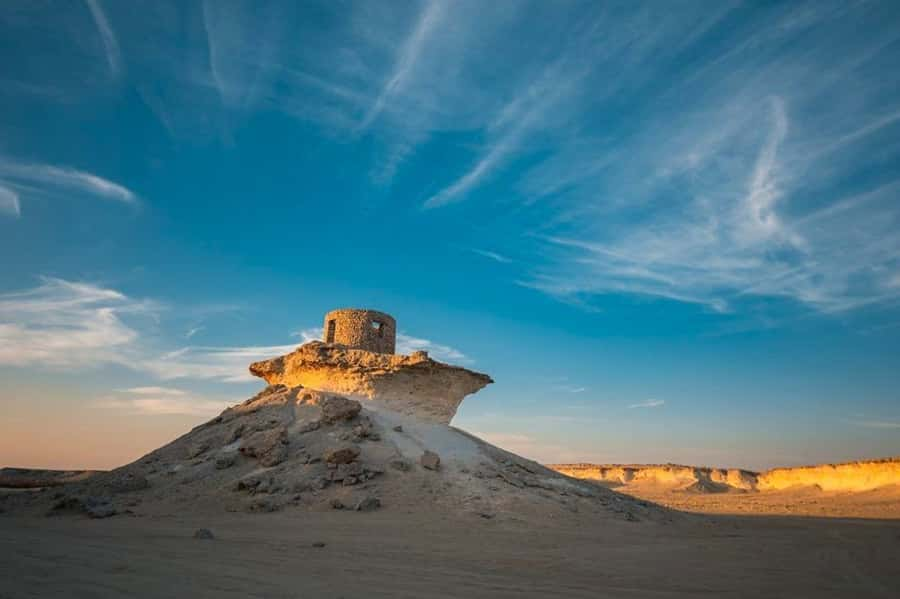
Al Zubarah Fort receives about 40 minutes, making it one of the longer stops. It is also the main historical anchor of the day.
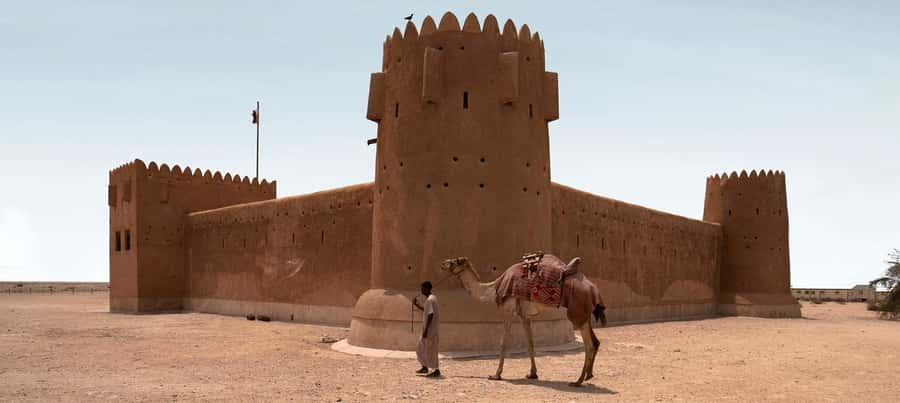
The fort is UNESCO-listed and connected to Qatar’s trading and archaeological past. Its sturdy form gives you something concrete to read: walls, defensive design, and a site built to protect an important settlement. The surrounding area adds weight to the visit, since Al Zubarah is not just an isolated fort placed for display.
Fort visits often work best when you understand what the building was protecting and why it was located there. This is another moment when the guide’s storytelling can turn stone walls into a picture of trade, movement, and regional competition.
Do not expect a huge complex or an entire museum district within the 40-minute stop. The visit is focused. You will have time to examine the fort, take photographs, and hear the main historical points, but not to spend hours on every archaeological detail.
I like the balance here. Al Jumail shows community life in a more informal and fragile form, while Al Zubarah gives you a formal structure tied to power and commerce. Together, they help explain Qatar’s past better than either stop would on its own.
Zekreet and the Road Toward Richard Serra
The itinerary includes a 30-minute visit to Zekreet, a western Qatar area known here as the setting for the final desert art stop. The route shifts again, from the northern coast and historic sites to the stark scenery of the west.
Zekreet is a good reminder that the tour is not only about buildings. The open desert and unusual natural forms create a different kind of experience, one based on space and silence rather than rooms or exhibits.
The stop is short, so your guide will shape how much you get from it. Listen for explanations of the area’s setting and geology, then allow yourself time to look around. The open space can feel almost abstract, which prepares you for the Richard Serra work.
The west can also feel exposed. Carry water, use sun protection, and do not assume the vehicle will make every part of the visit effortless. Water, tea, and soft drinks are provided, but you should still bring the basics you personally need for heat and sun.
Richard Serra’s East-West/West-East
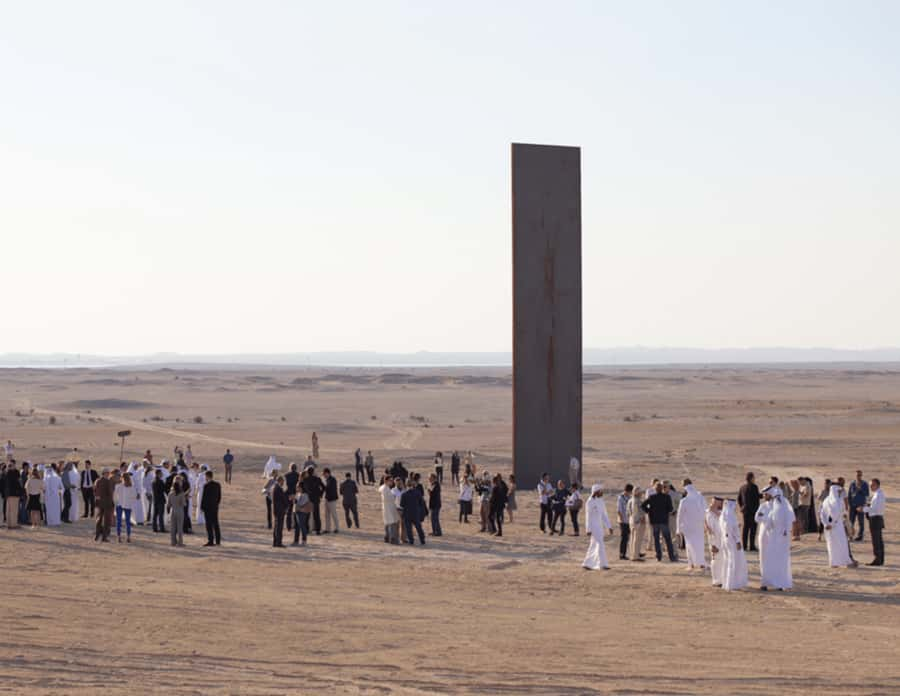
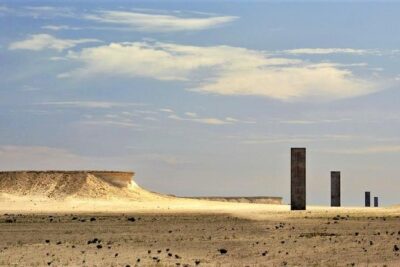
The final major attraction is Richard Serra’s East-West/West-East, visited for about 40 minutes. Four towering steel sculptures stretch across the desert, creating one of Qatar’s most memorable art experiences.
Serra’s work is powerful because of its scale. You do not simply look at a small sculpture from a fixed spot. You move through an open setting where the steel forms interact with distance, sky, and the ground beneath your feet.
The title points to the work’s long horizontal arrangement, and the experience changes as you walk around it. From one angle, the sculptures can feel severe and isolated. From another, they form a measured line across the desert. The setting does much of the work, so do not rush straight to a photograph and leave.
Forty minutes gives you enough time to see the installation from several positions and let the scale register. It is a good final stop because it leaves you with something visually bold after the older sites and coastal views.
This is also the point where the tour’s two subjects, heritage and art, meet most clearly. Qatar’s past is tied to movement across open land and sea. Serra’s sculpture uses that same openness in a completely modern way.
How the Seven-Hour Schedule Feels
The full experience lasts seven hours, including pickup from Doha, driving between stops, visits, and the return journey. The listed stops add up to 200 minutes, or three hours and 20 minutes. The remaining time is important because the sites are spread across northern and western Qatar.
That makes the tour feel like a regional journey rather than a series of nearby attractions. You should expect time in the vehicle, but that is not wasted if you want to see places that are difficult to combine independently.
The schedule is active without being a forced march. Most stops last 30 minutes, while Al Zubarah Fort and Richard Serra’s installation receive 40 minutes. You will have enough time to understand each place, but not enough to explore slowly or linger whenever a view catches your eye.
I would choose this tour over a more crowded city excursion if I had one free day in Doha and wanted variety. I would not choose it if my priority were a leisurely beach visit, a long museum session, or extended time at one archaeological site.
Transport, Guides, and What Is Included
Pickup and drop-off in Doha are included in an air-conditioned vehicle. That is a practical advantage because the route covers a wide area, and arranging separate transport to each site would be awkward.
An English-speaking guide accompanies the tour. The guide will contact you by phone or WhatsApp on the day of the tour to arrange pickup, so keep your booking contact details active and watch for that message.
Water, tea, and soft drinks are included. Meals are not included unless you select a meal add-on. Since the day runs for seven hours, plan for the meal issue rather than assuming food will appear along the route.
Entrance to Al Zubarah Fort, Al Jumail Village, the Olafur Eliasson art site, and the Zekreet East-West/West-East sculpture is included. That makes the package easier to budget, particularly because the route combines historical and art attractions that could otherwise involve separate entry arrangements.
A private group option is available. That can be useful if your party wants more control over photographs, questions, or the pace, though the standard booking details do not specify the size of the regular group.
Who Will Enjoy This Tour Most
I would recommend this experience to you if you like variety and want to see a less urban side of Qatar. It suits people who enjoy combining old settlements, fortifications, coastal views, and contemporary art in one day.
It is especially good for:
- First-time visitors who want to get beyond Doha
- Art lovers interested in site-specific work
- History fans who want to see Al Zubarah Fort and Al Jumail Village
- Photographers looking for open spaces and strong visual contrasts
- Couples, families, or small groups that value included transport
- Visitors who prefer an English-speaking guide to independent research
You should think twice if you dislike driving between stops or need a slow schedule. The tour covers a lot of territory, and the short visits leave little room for unplanned detours.
The day is also better for independent-minded children and teenagers than for very young children who need frequent breaks. The information supplied does not specify child ages, facilities, or stroller arrangements, so ask the provider before booking if those details matter to you.
Useful Preparation for the Desert and Coast
Bring a passport or ID card. A copy is accepted, which is a helpful detail if you prefer not to carry your original document.
Wear comfortable shoes and clothes suited to sun and open ground. The itinerary includes an abandoned village, a fort, and outdoor art sites, so you should not plan this as an indoor, air-conditioned sightseeing day.
Bring your own sun protection and any personal snacks you may need. Drinks are supplied, but meals are not included unless added separately.
A camera is worthwhile, especially at Al Ruwais, the Eliasson installation, and Serra’s long steel forms. Still, give yourself time to look without a screen. The strongest moments here come from scale, quiet, and the relationship between the work and the land.
The tour allows free cancellation up to 24 hours before departure for a full refund. You can also reserve now and pay later, which helps if your Doha schedule is still shifting.
Should You Book It?
Book this tour if you want a well-rounded day outside Doha and appreciate the unusual pairing of Qatari heritage with major desert art. The included transport, guide, refreshments, and site entries add practical value, particularly for a route that would be difficult to organize efficiently on your own.
I would be most inclined to book it with a private group if you care about photography or want more time for questions. If you join a regular group, accept the schedule as a sampler: you will see a lot, learn the main story of each stop, and leave with several strong impressions rather than a detailed study of every site.
The strongest reason to go is the combination. Al Jumail and Al Zubarah connect you with Qatar’s past, while Eliasson and Serra show how artists respond to its open spaces today. Add Al Ruwais and Zekreet, and you get a thoughtful, practical introduction to northern and western Qatar in one long day.
FAQ
How long does the tour last?
The tour lasts seven hours, including pickup from Doha, visits to the sites, travel between stops, and return to Doha.
Where does pickup take place?
Pickup and drop-off are provided in Doha. The guide contacts you by phone or WhatsApp on the day of the tour to arrange the pickup.
Which language is the tour conducted in?
The live tour guide speaks English.
Is the tour private?
A private group option is available. The supplied information does not specify the size of the standard group.
What sites are included?
The route includes Al Ruwais, Al Jumail Village, Olafur Eliasson’s desert art site, Al Zubarah Fort, Zekreet, and Richard Serra’s East-West/West-East sculpture.
Are entrance fees included?
Entrance to Al Zubarah Fort, Al Jumail Village, the Olafur Eliasson art site, and the Zekreet East-West/West-East sculpture is included.
Are food and drinks provided?
Water, tea, and soft drinks are included. Meals are not included unless you choose the meal add-on.
What identification should I bring?
Bring a passport or ID card. A copy is accepted.
Can I cancel or pay later?
You can cancel up to 24 hours in advance for a full refund. Reserve-now, pay-later booking is also available.
More Combo Days in Doha
- Desert Combo safari, Camel ride, Quad Bike and Dune Bashing(ALL INCLUSIVE)
★ 5.0 · 268 reviews - Doha: Combo City Tour & Desert Safari with Pickup drop-off
★ 5.0 · 265 reviews - Desert Safari Combo: Camel Ride, Sandboarding & Inland Sea Visit
★ 5.0 · 253 reviews - Doha Combo City And Half Day Desert Safari Tour No Hidden cost
★ 5.0 · 210 reviews
Just added in Doha
- Doha: Night Desert Safari With Stargazing and Inland Sea★ 5.0 · 9 reviews
- From Doha: Private West Coast and Camel Race Track Tour★ 4.7 · 4 reviews
- Doha-Private half day safari Sunrise/Sunset★ 5.0 · 6 reviews
- Private Wakesurfing or Wakeboarding along Doha’s skyline★ 5.0 · 3 reviews
- Doha: West Coast Tour Sculpture,Camel Racing Track Rock Formation★ 5.0 · 3 reviews
- Doha : West Coast Tour on Zekreet Peninsula★ 5.0 · 15 reviews
- Private Dunes Bashing | Desert Safari | Sand Boarding★ 5.0 · 5 reviews
- Doha Night Desert Safari Adventure★ 5.0 · 11 reviews
West Coast Tours, compared.
Qatar West Coast tour to Richard Serra Sculpture and Mushroom Rock Formation
Read our review →
Qatar West Coast tour, Zekreet, Richard Serra Sculpture, Mushroom Rock Formation
Read our review →
West Qatar tour to Richard Sierra sculpture,Umbrella Rock
Read our review →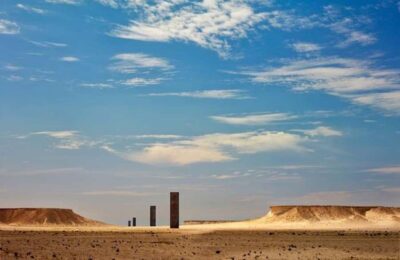
West Coast Qatar Tour, Sculptures, Camel Racing track
Read our review →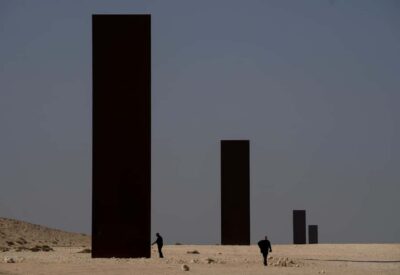
West Coast tour, Zekreet, Richard Serra Sculpture, Mushroom Rock Formation
Read our review →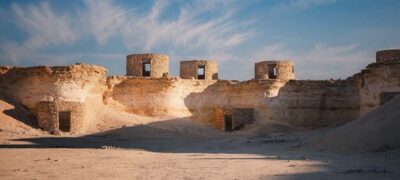
Explore Zekreet: Richard Serra Art & Mushroom Rock Wonders
Read our review →Browse the lists this tour appears in